INSIDE THE GLOBAL VMMC CAMPAIGN
WHO launched 27 million circumcisions as HIV strategy. The US declined, Eastern Europe rejected it — and India beat its epidemic without a scalpel.
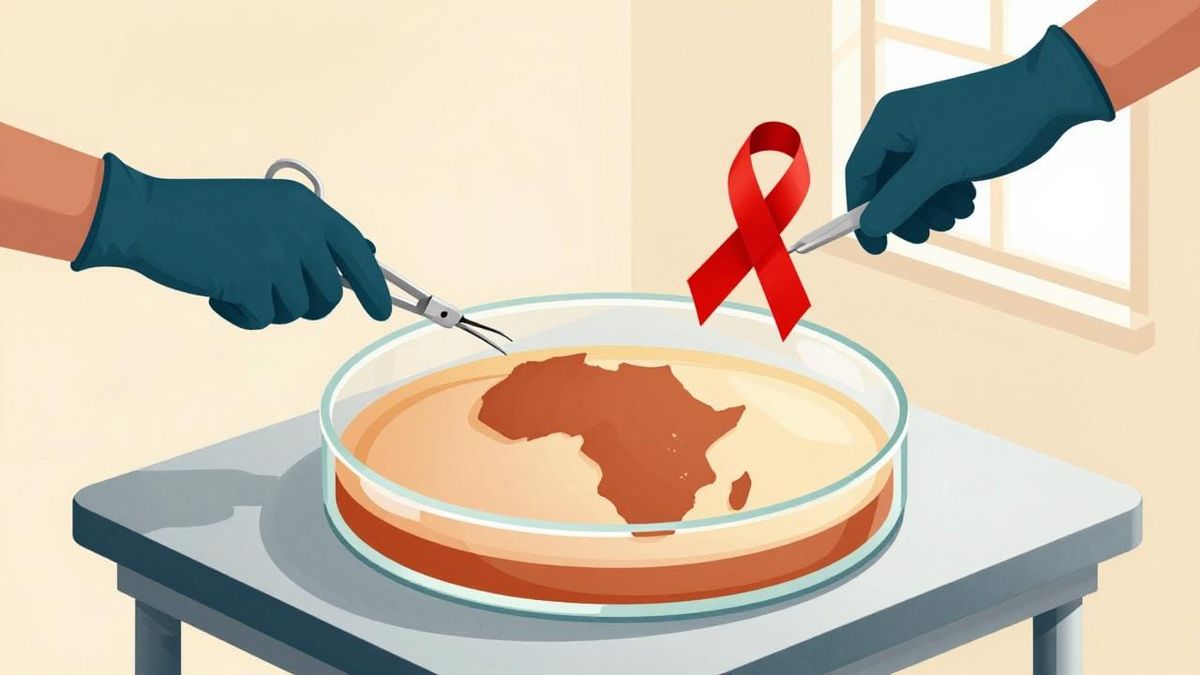
How the World Health Organization turned circumcision into a major HIV prevention strategy — and why the most striking counterexample never joined it
By The S.Q. Magazine Investigative Desk ·
"A 60 percent reduction in risk does not equal immunity."
In March 2007, the World Health Organization (WHO) and UNAIDS launched one of the most ambitious public health campaigns in modern HIV prevention history: Voluntary Medical Male Circumcision, or VMMC.
Health officials promoted it as a scientific breakthrough capable of reducing heterosexual HIV transmission in some of the world's hardest-hit regions. Governments across eastern and southern Africa adopted the strategy, donors poured billions into implementation, and public health agencies framed circumcision as a critical weapon against the epidemic.
Nearly two decades later, the strategy still raises difficult questions. Why did WHO choose a surgical procedure as a central HIV intervention? Why did so many countries decline it? And why, if circumcision reduced HIV risk, did agencies keep insisting on condoms?
Procedures performed 27M +– 2008–2022, WHOPEPFAR investment~$2B–FY2007–FY2025 Trial-reported risk reduction60%–female-to-male onlyCost per infection averted$2,967–modelling estimate
The evidence that changed global HIV policy
WHO based its recommendation on three randomised controlled trials — 3,274 men in Orange Farm, South Africa (Auvert et al., 2005); 2,784 in Kisumu, Kenya (Bailey et al., 2007); and 2,997 in Rakai, Uganda (Gray et al., 2007). Circumcised heterosexual men showed roughly 60 percent lower risk of acquiring HIV from female partners. Two of the three trials were stopped early after interim analyses showed protective effects — a fact that would later fuel criticism.

The recommendation was precise: it applied to countries with high HIV prevalence, predominantly heterosexual transmission, and low circumcision rates. WHO and UNAIDS initially designated 14 priority countries in eastern and southern Africa; later WHO briefs added South Sudan, bringing the total to 15.
What the recommendation did not claim is equally important. It never asserted protection for men who have sex with men (MSM), for women directly, or for all transmission routes. Later studies found, at most, partial protection for insertive partners only — a much weaker evidence base than the African trials (Aidsmap, 2024).
Why VMMC won the funding race
If circumcision worked so well, why did WHO keep pushing condoms? Because 60 percent protection is not immunity, and condoms guard against far more. But the deeper question — why institutions championed surgery over behaviour — has five answers.
Cost. Modelling places VMMC at roughly $2,967 per infection averted, versus $3,000–$4,000 for condoms, $4,500–$5,000 for antiretroviral therapy, and $5,500–$6,000 for oral PrEP, at about $68 per procedure (Bansi-Matharu et al., 2023; WHO, 2019). One procedure, lifetime protection, no recurring cost.
Scalability. VMMC generates clean metrics — procedures performed, coverage rates, cost per circumcision. More than 27 million of them between 2008 and 2022 (WHO, 2023). Behavioural interventions produce messier outcomes that resist donor-friendly reporting.
Behavioural reliability. Condoms, used correctly, prevent HIV transmission 80–95 percent of the time — far better than VMMC's 60 percent. But real-world use falters: a systematic review of 20 studies found condom breakage prevalence ranging from 3 to 37 percent, and slippage from 2.1 to 28 percent, alongside delayed application, early removal, and fit problems (Open AIDS Journal, 2020). VMMC removes the behavioural variable entirely — a set-and-forget intervention.
Institutional incentives. PEPFAR's total HIV/AIDS investment exceeds $85 billion since 2003 (U.S. Embassy Nigeria, 2025). Device suppliers, implementing NGOs, and research institutions all hold stakes in continuation — what analysts describe as an intervention industrial complex. Condoms and community education generate thinner commercial revenue streams.
Timing. The trials concluded in 2005–2007, before PrEP (FDA-approved 2012), long-acting Cabotegravir (2021), or the HPTN 052 trial's treatment-as-prevention findings (2011). VMMC filled a gap that no longer exists in the same form.
The money trail

PEPFAR committed approximately $2 billion to VMMC between fiscal years 2007 and 2025 (U.S. Department of State, 2024). CDC alone supported roughly 8.5 million procedures across 13 countries during 2017–2021 (CDC, 2023). Multiplying the $68 unit cost across 27 million procedures implies roughly $1.8 billion in total expenditure — a derived estimate, not a published aggregate.
Critics, notably Boyle and Hill (2011), argued the trials' methodological choices — including early termination that may have inflated effect sizes — complicated the headline 60 percent figure. They also questioned the opportunity cost: $2 billion flowing to a single surgical intervention while structural drivers of African epidemics — poverty, gender inequality, healthcare access, testing stigma — went comparatively unfunded.
Who said no — and why
The United States: CDC does not recommend routine VMMC for HIV prevention, noting circumcision has not been shown to reduce HIV acquisition among MSM, who account for most U.S. infections (CDC, 2014).
Eastern Europe: In Russia and Ukraine, transmission runs primarily through injection drug use, making circumcision far less cost-effective than needle exchange and opioid substitution (UNAIDS, 2024; ThinkGlobalHealth, 2023).
Western Europe, Canada, Australia: comprehensive prevention mixes — PrEP, universal care, low-stigma testing — made VMMC redundant.
WHO never sanctioned refusers. The programme was, officially, voluntary and country-led.
The India contrast: a playbook without the scalpel
Now the counterexample that never joined the campaign — and never was asked to.
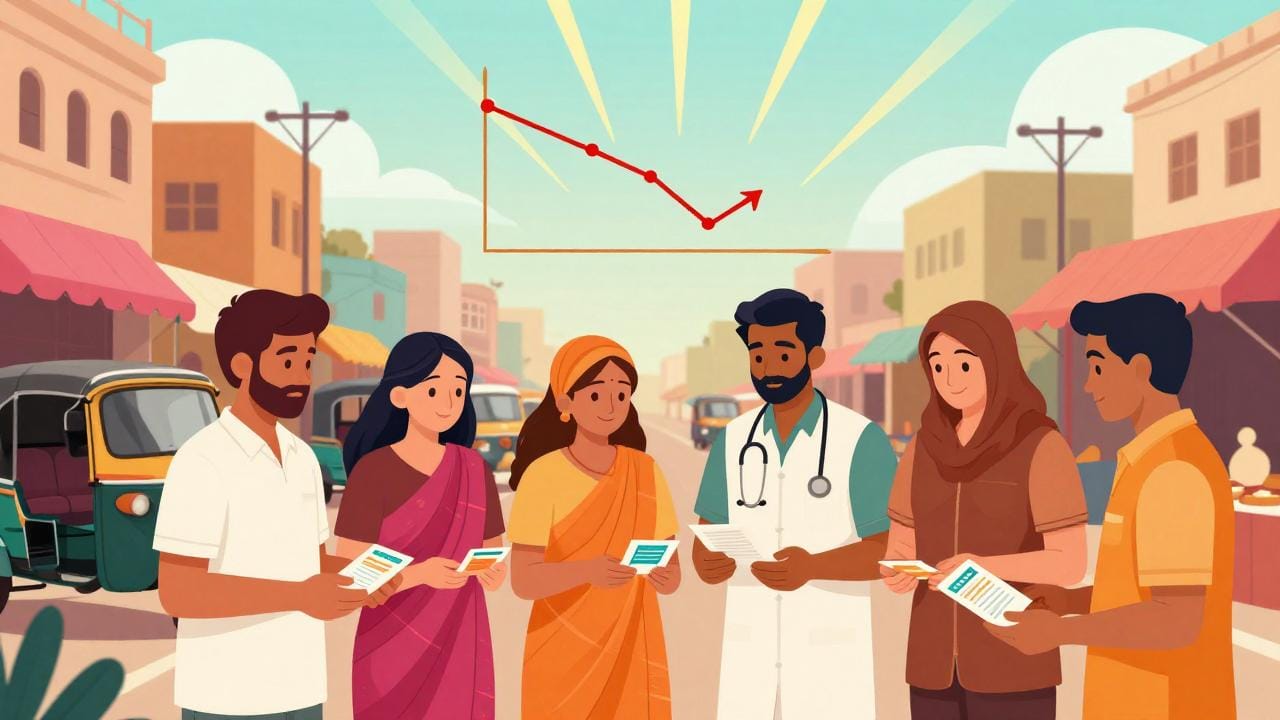
In 2007, the same year WHO recommended circumcision for Africa, India confronted uncomfortable data of its own. Sentinel surveillance had suggested roughly 5.2 million Indians living with HIV — briefly on par with the world's largest epidemic (Steinbrook, 2007). Then NACO, working with WHO and UNAIDS, rebuilt its estimation methodology: revised figures came in at 2 to 3.1 million, adult prevalence around 0.36 percent (WHO, 2007). NACO had already admitted publishing wrong figures years earlier (Mudur, 2000), and researchers had called the old estimates grossly overstated (Aidsmap, 2006).
The corrected picture showed a concentrated epidemic — driven by sex workers, MSM, and people who inject drugs. And India answered it with methods that involved no scalpel. Targeted interventions pushed condom use, STI treatment, and needle-sharing reduction toward saturation coverage of high-risk groups (Ng et al., 2011). The Gates Foundation's Avahan programme delivered community-led prevention from 2003 onward.
The measured results: Avahan's condom and STI components prevented an estimated 62,800 infections in its first four years across 24 studied districts; extrapolated across all 69 districts, the modelling credits it with roughly 202,000 infections averted over four years and about 606,000 over ten — 42 percent and 57 percent of projected infections respectively (Pickles et al., 2013; Imperial College London, 2013). By 2023, new infections nationwide stood 44 percent below 2010 levels (Kaur et al., 2025).
The honest counterweight: India's epidemic type differs fundamentally from Africa's generalised heterosexual epidemics, and Karnataka researchers cautioned that prevalence declines could not be credited to interventions alone (Ng et al., 2011). But the burden of proof shifts nonetheless. If a low-income democracy produced double-digit infection declines through community-led condoms, peer outreach, and STI care — without a single circumcision campaign — the case for spending an estimated $2 billion on surgery elsewhere owes the world an explanation.
The Sankofa Question
What must African nations and the Black diaspora do to forge independent health futures?
WHO launched a campaign of more than 27 million procedures on one continent. The CDC explicitly declines the same recommendation for the United States; Eastern Europe rejects it; only Black-majority nations received it at scale (CDC, 2014; UNAIDS, 2024). Critics argue the disparity reflects systemic bias — surgical solutions for Black populations, withheld from white-majority nations (News-Medical, 2020; Boyle & Hill, 2011).
India's experience sharpens the question rather than answering it. A government that rebuilt its own surveillance, admitted its figures were wrong, and staked its response on community-centred prevention achieved a 44 percent decline in new infections over thirteen years — without VMMC (WHO, 2007; Ng et al., 2011; Kaur et al., 2025). Whose evidence counts, and who decides when a continent becomes the only laboratory?
The path forward is self-reliance: surveillance systems, laboratory networks, vaccine production, and pharmaceutical manufacturing that answer to African health needs first — decisions made from within, not from distant donor frameworks. Who decides what constitutes effective prevention for African bodies, and who profits when those questions receive answers?
References
Aidsmap. (2006). India's HIV prevalence has been "grossly overestimated".
Aidsmap. (2024). Medical circumcision reduces HIV risk for gay and bisexual men — but only for tops.
Auvert, B., et al. (2005). Randomized, controlled intervention trial of male circumcision for reduction of HIV infection risk. PLoS Medicine, 2(11).
Bailey, R. C., et al. (2007). Male circumcision for HIV prevention in young men in Kisumu, Kenya. The Lancet, 369(9562).
Bansi-Matharu, L., et al. (2023). Cost-effectiveness of VMMC for HIV prevention in sub-Saharan Africa. The Lancet Global Health.
Boyle, G. J., & Hill, G. (2011). Sub-Saharan African randomised clinical trials into male circumcision and HIV transmission: Methodological, ethical and legal concerns. Journal of Law, Medicine & Ethics, 39(3).
CDC. (2014). Recommendations for providers counseling male patients and parents regarding male circumcision. Federal Register.
CDC. (2023). Voluntary medical male circumcisions for HIV prevention — 13 countries, 2017–2021. MMWR, 72(10).
Gray, R. H., et al. (2007). Male circumcision for HIV prevention in men in Rakai, Uganda. The Lancet, 369(9562).
Imperial College London. (2013). Avahan AIDS initiative may have prevented 600,000 HIV infections.
Kaur, J., et al. (2025). Integrated and enhanced surveillance and epidemiology under India's National AIDS and STD Control Programme. PMC.
Luchters, S., et al. (2008). No evidence for increased sexual risk behavior following VMMC in Kenya. JAIDS, 48(5). PMID: 18641553.
Ng, B. E., et al. (2011). Population-based biomedical STI control interventions for reducing HIV infection in India. BMC Public Health, 11.
Mudur, G. (2000). Indian agency admits publishing "wrong" HIV figures. BMJ.
News-Medical. (2020). Male circumcision campaigns to reduce HIV transmission in Africa are based on systemic racism.
Open AIDS Journal. (2020). Errors in condom use in the setting of HIV transmission: A systematic review. 14.
Pickles, M., et al. (2013). Assessment of the population-level effectiveness of the Avahan HIV-prevention programme in South India. The Lancet Global Health, 1(9).
Steinbrook, R. (2007). HIV in India — A complex epidemic.
ThinkGlobalHealth. (2023). Eastern Europe's looming health crisis. Council on Foreign Relations.
U.S. Department of State. (2024). Update on PEPFAR's programming budget for 2024/2025.
U.S. Embassy Nigeria. (2025). PEPFAR overview.
UNAIDS. (2024). Eastern Europe and Central Asia regional profile.
World Health Organization. (2007). 2.5 million people in India living with HIV, according to new estimates.
World Health Organization. (2023). VMMC for HIV prevention: Progress brief 2023.
World Health Organization. (2019). VMMC cost and impact modeling [Presentation]. WHO/ICASA.
Keep This Work Going
This investigation was built the slow way: original research, verified sources, every claim checked before it reached you. That work is funded by readers, not advertisers — which is exactly why it can ask hard questions.
The Investigator — $5/month or $50/year. Every weekly article, full newsletter access, the complete archive, and limited audio and video interviews.
The Collector — $9/month or $90/year. Everything above, plus full-length interviews, the complete archive, and the full magazine experience: downloadable EPUB and PDF editions with trivia, games, college references for every discipline covered, and original Sankofa Question Magazine artwork.